Meet Annie Alimuwa: Turning Personal Loss into a Lifelong Mission for Safe Motherhood
When Annie Alimuwa enrolled on the Master of Public Health Leadership (MPHL) program at Uganda Christian University (UCU) in 2005, she carried a desire to improve people’s health. Although she was not a medical doctor, she believed she could make a meaningful contribution to maternal and newborn health. Through the MPHL program, Annie found the opportunity to pursue her goal.
More than 20 years later, the knowledge and skills she gained continue to guide her work with pregnant women, mothers and families in hard-to-reach communities in Wairasa Sub-county, Mayuge District, eastern Uganda.
Her motivation is personal. “I lost my first-born because I lacked the right safe motherhood information. I do not want any woman to experience what I went through.”
That loss inspired Annie to help women and families access maternal and newborn health information so they can make informed decisions throughout pregnancy, childbirth and the postnatal period.
A social worker by profession with a degree in Sociology, Annie proudly describes herself as the “Doctor of Society.”
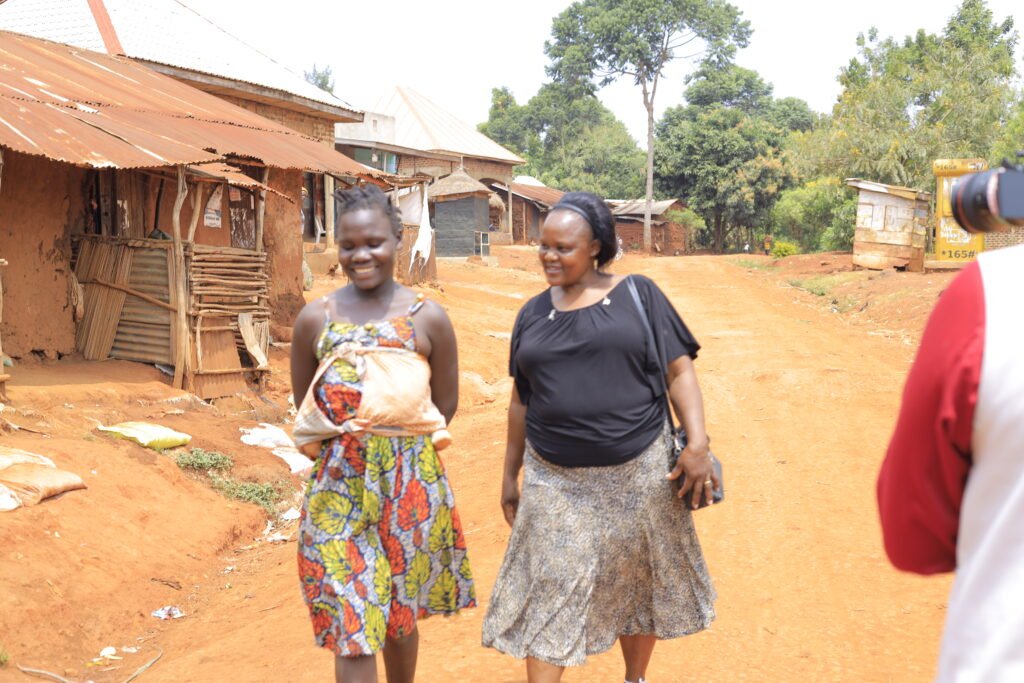
“I journey through forests of sugarcane to take safe motherhood messages to women who need them most,” she says.
Through her community initiative, Quick Touch for Safe Motherhood, Annie reaches women in areas where health facilities are distant, transport is difficult, teenage pregnancies are common and some mothers still give birth at home. Much of her work is voluntary and funded through her own resources, with additional support from family and friends.
Her approach begins with simple questions: “Are you pregnant? Have you attended antenatal care? Have you prepared for delivery? Is your baby immunised?”
These conversations provide opportunities to encourage women to attend antenatal care, prepare for childbirth, deliver at health facilities, seek postnatal care and complete their babies’ immunisation schedules.
During community visits, Annie reaches about 15 pregnant women and mothers. She also contacts husbands by phone or visits them at home to encourage their involvement in pregnancy and childbirth. This approach draws on her MPHL research into factors influencing male involvement in maternal health.
The impact is reflected in the experiences of the women she reaches. During one community engagement, a young mother arrived carrying her newborn and shared her good news.
“This is my new baby,” she said with a smile. “I have just returned from the health centre where I took him for immunisation, just as you advised me.”
For Annie, such experiences show how community conversations can influence decisions that protect mothers and newborns.
Looking back, Annie credits the MPHL program at UCU with equipping her not only with technical knowledge of maternal and newborn health but also with leadership, communication, advocacy and community mobilisation skills. These have helped her turn personal loss into practical action within her community.
Her journey reflects the shared commitment of STM and UCU to equip professionals from diverse backgrounds beyond health with the knowledge and skills to help reduce preventable maternal and newborn deaths.
Annie’s story also demonstrates how MPHL graduates are applying their training long after completing their studies, extending safe motherhood messages beyond health facilities and into the communities.
Through Quick Touch for Safe Motherhood, Annie continues to encourage informed choices, connect families with care and promote safer outcomes for mothers and newborns.
By Teopista Agutu – Save the Mothers East Africa Communications and Networking Director